Undergraduate 4 years
B.E. Electrical and Electronics Engineering
Bachelor of Engineering
Its page covers: Curriculum · Outcomes · Careers · Admission
B.E. EEE
 Er. Perumal Manimekalai College of Engineering (PMC Tech) — home AutonomousAccredited by NAAC with 'A' Grade Approved by AICTE, New DelhiAffiliated to Anna University, Chennai
  NAAC ‘A’ Grade
  NBA Accredited programmes
  UGC Autonomous
  ISO 9001:2015
Department
About
The Department of Electrical & Electronics Engineering was established in the academic year 2002-2003 & Postgraduate Programme M.E., in Power Electronics and Drives in 2013.
It has well-equipped laboratories with a state of art Electrical Machines, Power Electronics & a Power System Simulation Lab equipped with software’s such as MATLAB, PSIM, etc., Qualified and experienced faculty members have been involved in teaching and conducting various short term courses for the benefit of students.
The Department initiates the U.G., & P.G., research projects in Embedded Systems, Power Systems and Power Electronics through the IEDC and MSME which is based on the collaboration of institution & industry.
Purpose
To develop eminent electrical and electronics engineers with innovation ability, research and ethical values.
Study
The programmes the department offers. Each has a page of its own, and its card says what that page covers.
Bachelor of Engineering
Its page covers: Curriculum · Outcomes · Careers · Admission
B.E. EEE
Master of Engineering
Its page covers: Curriculum · Admission
M.E. Power Electronics
Doctor of Philosophy
Its page covers: Admission
Ph.D. EE
People
16 members of faculty.

Principal

Professor

Professor

Associate Professor

Assistant Professor

Assistant Professor

Assistant Professor

Assistant Professor

Assistant Professor

Associate Professor

Assistant Professor

Assistant Professor

Assistant Professor

Assistant Professor
Assistant Professor

Assistant Professor
Facilities
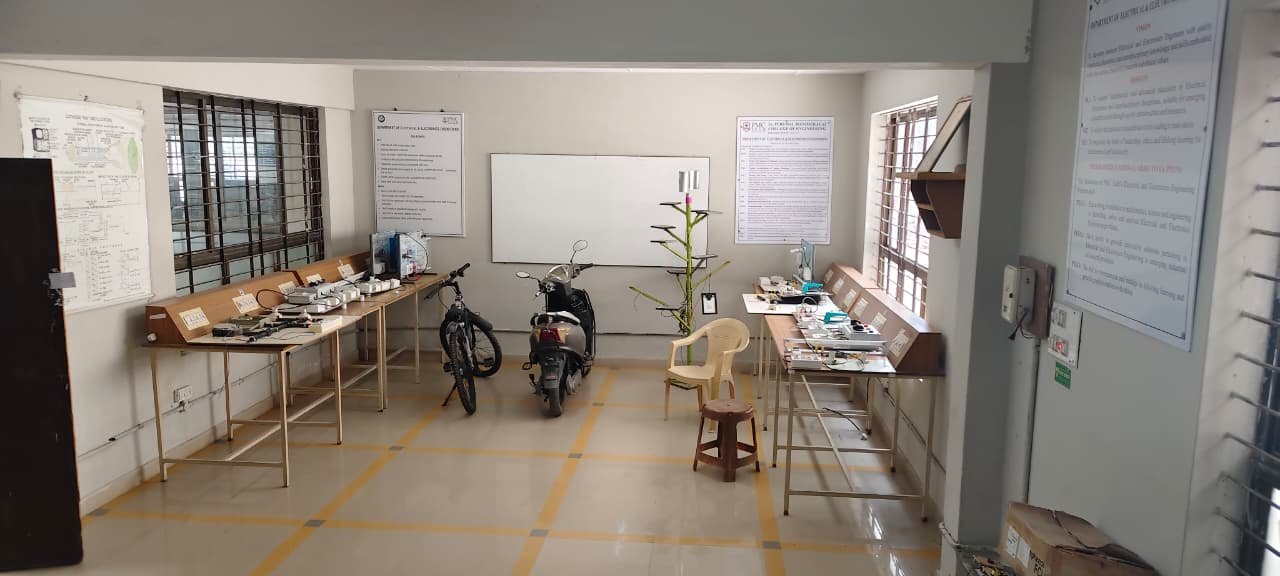
12 laboratories for practical and project work.


Skills

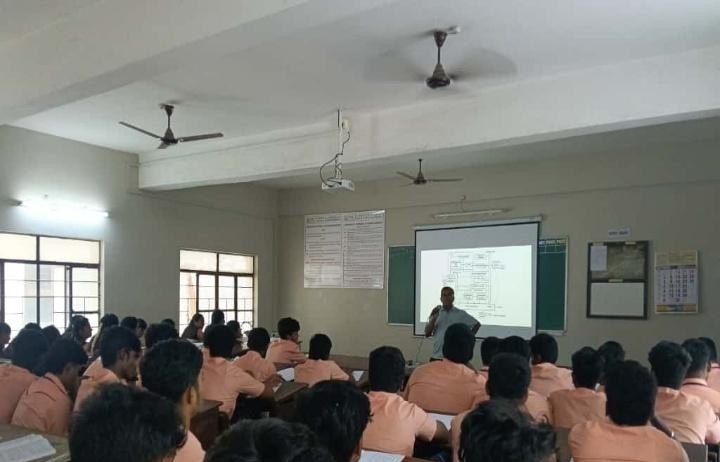
Value added course, 2–7 March 2026, in association with the National Small Industries Corporation (NSIC), Chennai; for second-year students (Semester IV), 67 participants. Hands-on sessions on Raspberry Pi hardware, GPIO interfacing and the development of embedded and IoT-based remote monitoring applications.

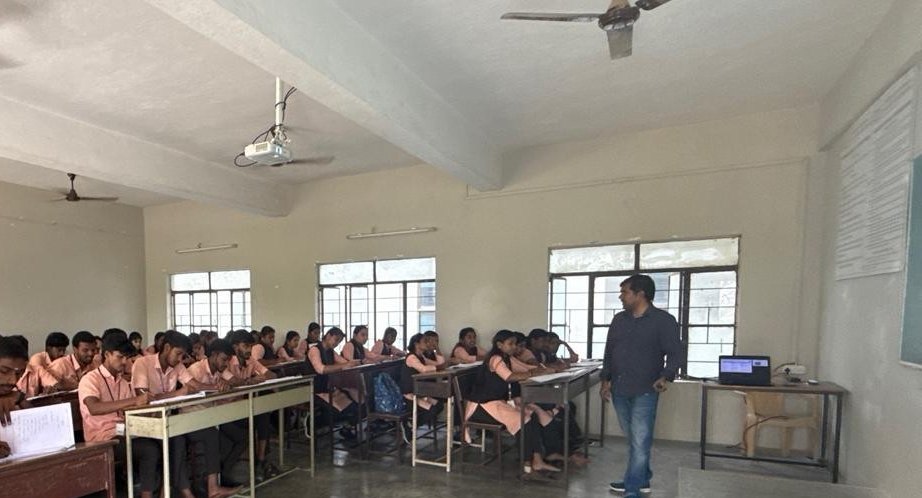
Value added course, 6–10 April 2026, 9:00 a.m. to 4:00 p.m.; for third-year students (Semester VI), 65 participants. Mr. Arul Prabagar, NSIC, Chennai, taught rapid prototyping techniques, microcontrollers, embedded systems, PCB design, simulation tools and electronic product development, with hands-on sessions.
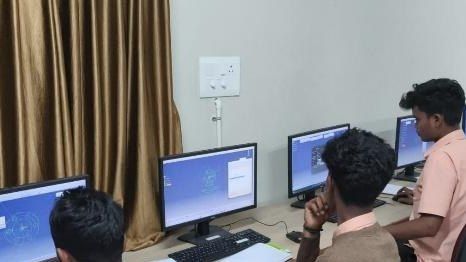
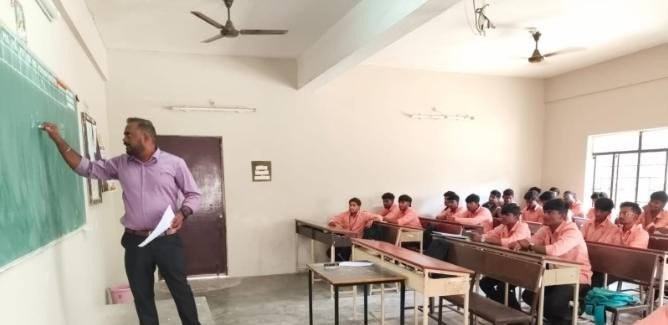
Value added course, 18 January – 24 April 2026, every Monday and Tuesday; for second-year students (Semester IV), 63 participants. Mr. R. Shree Karthik, TANCAM, Chennai, covered product design methodologies, 3D modelling concepts, computer-aided design (CAD) tools and industry-oriented design practices.
In association with Campus Connect, 23–27 March 2026; for third-year students (Semester VI), 67 participants. Interactive sessions, practical activities, mock interviews and group discussions to build communication skills, interview techniques and readiness for campus recruitment.

Training by Bytes, 2–14 August 2025; for third-year students (Semester V), 65 participants. Structured hands-on sessions and problem-solving activities built a foundation in C programming, with emphasis on logical reasoning, algorithm design and coding best practices.
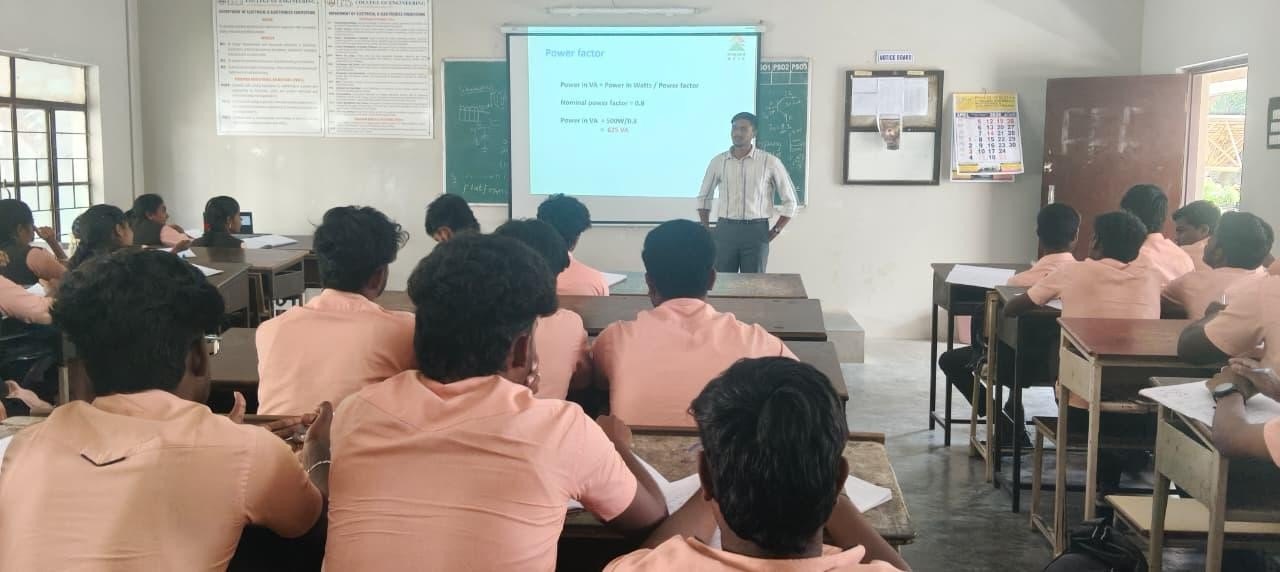
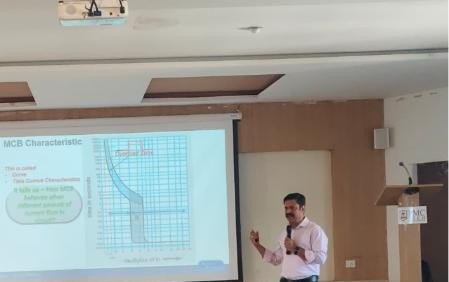
In association with L&T Switchgear, Ooty, 23–25 September 2025; for second-year students (Semester III), 65 participants. Operating principles, protection mechanisms, safety standards and real-time practices of power distribution systems.
IEP training, 16–23 September and 30 September – 8 October 2025; for second-year students (Semester III), 65 participants. Schematic capture, PCB layout design, component placement, routing strategies and basic fabrication techniques, with hands-on design exercises covering the PCB development cycle from concept to fabrication.

11 and 12 December 2025; for fourth-year students (Semester VII), 64 participants; conducted by AWAKE. Technical fundamentals alongside communication, teamwork, problem-solving and professional ethics, to prepare students for the expectations of the workplace.
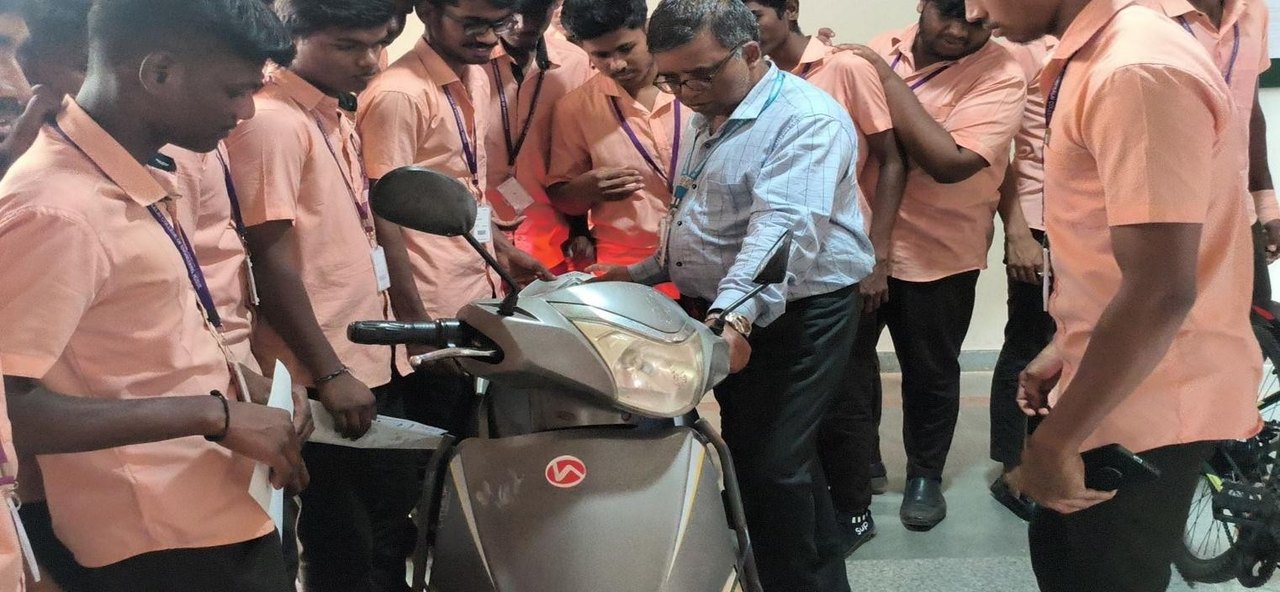
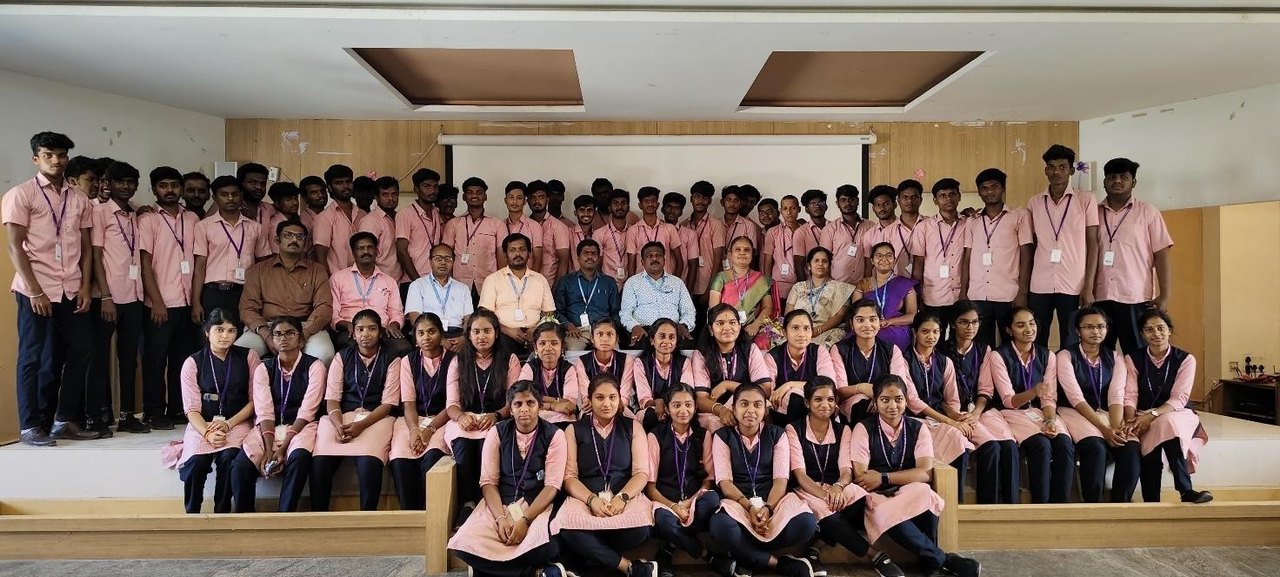
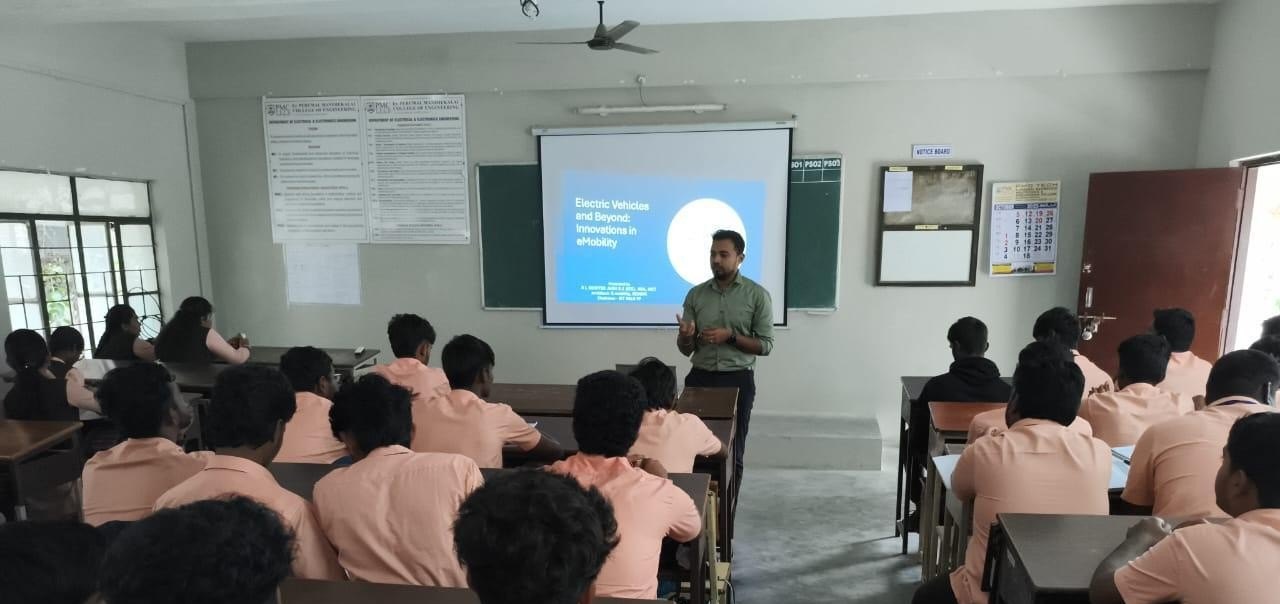
By GTT Foundation, 6 October – 7 November 2025; for fourth-year students (Semester VII), 64 participants. EV architecture, battery management systems, charging technologies and safety standards, with sessions on communication, teamwork, professional ethics and workplace readiness.
Industry





Associations

The department’s news and announcements will be published here.
Photographs
Get in touch
Head of department
Professor
College office
Have a question for the department — about its programmes, research, training or working together?
Opens a new email to the college office in your email app.
Your email app should open a new message, already addressed. Your browser may ask for your permission first. If nothing opens, or you use email in a web browser, copy this address into a new message:
info@pmctech.org